At the outset, let me just say that the OAME/AOEM Leadership Conference is open for registration!!! You can check out the program here and register here (this link is also in the program). If you want to read about the process I went through in putting together the program for next year...read on.
Grantland Rice had a short poem published in the Washington Times in 1914. The title of the poem was "July" and the subject matter had to do with the lost hope that many baseball fans feel in July as they realize that their club more than likely will not be in contention this season. It is a familiar feeling for many ball fans...especially Jay fans this year. Apologies...for those that know me - this is gleeful dig as my Sox sit atop the Bluebirds at this point in the season. GO SOX! The last line in the poem is a stubborn and defiant statement that next season will be different. You'll see - wait 'til next year.
The poem wasn't in my head but the idea of waiting for next year definitely was when I attended the OAME 2018 Leadership Conference in Windsor. The Leadership Conference is the brainchild of the OAME president each year. Browse through past OAME Leadership brochures and you will get a sense of what the vision was for each past president. Current pres, David Petro, did a masterful job of putting together a program that engaged all those who attended the conference. I think he would agree that when he woke up the next day that he felt a lot lighter knowing that the planning and running of the conference was all done...until next time. What do you think David?
The planning all happens in the year prior to the president's term but once a new school year starts, the big pieces are usually (hopefully) in place for the conference. I have had the honour of serving once before as OAME/AOEM president. It was during the 2014-15 school year and my vision was to dig deeper into the ideas of fixed versus growth mindsets that were just starting to take hold in many classrooms. I had been the co-chair of the 2014 OAME Conference with Dwight Stead (@DwightStead)...or as everyone else referred to him, "The Smart Chair" and the program committee got Jo Boaler to come up for the first time and many agreed that it was the highlight of the program. And so I wanted her back as well for the Leadership Conference in 2015 as well as having key presenters from our own backyard like Amy Lin, Shelley Yearley and Dr. Cathy Bruce. The last time it felt so easy to put together the leadership conference.
Fast forward to November 9th in Windsor and my thoughts turned to organizing the leadership conference for 2019. Truth be told, I was not looking forward to it. The winds of change were starting to blow and I had no idea what the landscape would look like by the time November 2019 came around. As the months wore on, the thought of leaning into this uncertain time started to solidify and rather than shying away from what might be, I wanted to embrace that uncertainty. The uneasiness of what the provincial landscape would look like, who would be able attend, what funding would be available, and so on brought me to the conclusion that more than ever, we need to come together as leaders in the math community and talk about how to lead in these uncertain times. And so the theme, "Paying Attention to Leadership in Mathematics" emerged. I wanted the speakers at the event to address as many of the of the facets that as a community within this province we attend to in our roles. Instruction. Assessment. Equity and Access. Administrators. Innovation and Design. How do we continue to press on and advance the good work of the past into the future under challenging circumstances?
My hope is that the program for the OAME/AOEM 2019 Leadership Conference that has been assembled will do that and that delegates will have the opportunity to network and discuss strategies for moving forward. I also hope that the learning won't stop there. I am hoping to extend what is started at the conference into the remainder of the year with other online learning opportunities open to those who attend. Next year will be tough. But I am reminded of the Margaret Mead quote whenever things get tough. "Never doubt that a small group of thoughtful, committed citizens can change the world; indeed, it's the only thing that ever has." That may be a tad dramatic but the stakes are indeed high. We owe it to our colleagues, the teachers we work with, the parents we serve and most of all to the students in the classrooms to continue to strive for a mathematics education that is informed by good research, that serves and honours ALL of our students, and enriches all of our lives (students, teachers and leaders). It is a system that is the envy of so many globally no matter how many may argue the opposite. I hope to see you there in November so we can continue the great work of teaching math in this province.
Friday, June 21, 2019

Saturday, April 27, 2019
Its deja vu all over again...

A few days past, our school learned that 17 teachers were losing their jobs. In my department alone we are losing 6 full-time math teachers. My hope is that in the coming weeks or months that this loss will be minimized. But that is as likely as the Leafs making it to the second round in some playoff series in some season in some year in some future. The government has announced an Attrition Protection Allocation which sounds interesting but I still cannot fathom how an increase in class sizes cannot decrease the number of full time teachers needed. I cannot express how much of an impact this will have on my department, on our math program and most importantly on OUR STUDENTS. These are teachers who were coaching teams, running clubs, attending professional development, providing extra help and just doing an amazing job. In all my years of teaching I haven't seen a group of young teachers as talented as the group that joined my department. And with the stroke of an idiot's pen, poof. They are pulled from a department and a vocation that they are committed to more so than any of the those that signed the documents resulting in this job loss. It was just two days after the news had been delivered to these teachers that ALL 6 sat with me at a professional development session on exploring issues surrounding math and black students. I am not sure I would have had the stomach had I been in their place but they were there. This is what we are losing. And apparently this is just the start. Next year will bring more!
Tuesday, March 12, 2019
 Why do I attend T3 International Conference?
I started writing this post when I arrived at the T3 (Teachers Teaching with Technology) international conference on Thursday and this is my first chance to really sit down and finish it. At the start of the conference, maybe out of a sense of nostalgia, I was really stumped trying to go back through the years and recall the first one I attended. I think my difficulty recalling that is attributable to many factors but top of that list is my trouble recalling anything now.
As the days wore on and I connected with more and more colleagues I realized it was 2007 in Chicago. I recall driving to Chicago from Brampton, an 8 hour trek, right after school. Not too sure what I was thinking. I do know that I was eager to see what teachers were doing with the latest in handheld technology, the TI-Nspire CAS. But here I am in 2019 and this year's conference, the 31st, took place in Baltimore, and I ask myself the question, if I was not a T3 instructor, would I have come back to this conference?
Over that time, the sessions on the program have changed to reflect a changing focus in the math classroom. The TI-Nspire technology itself sustained a period of learning and creativity with its document model that connected a variety of applications. You could graph a function but also have it available for calculations on a calculator page or a spreadsheet page. As a teacher of data management, the device liberated me from the need to book a computer lab in order to work with data. There was a period where teachers across the globe were creating advanced constructions with the technology to make math more visual.
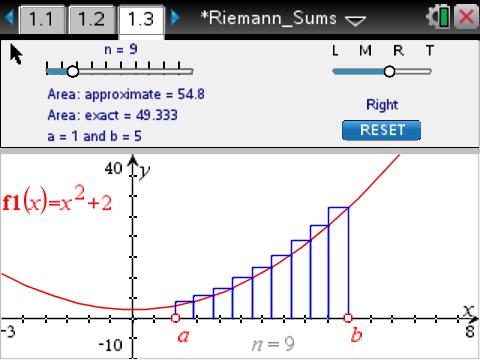
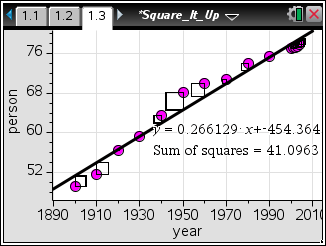
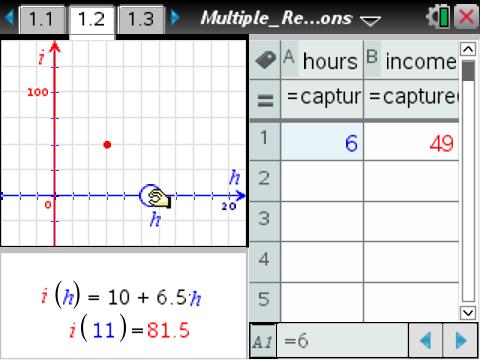

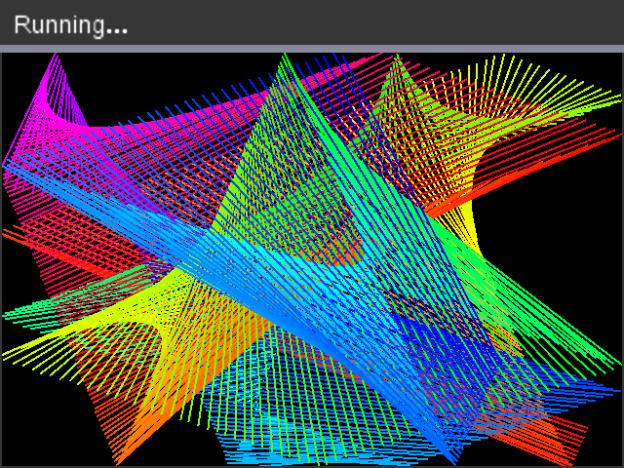
The technology advanced each year and opened up new opportunities. The ability to embed graphics into documents, the ability to collect real-world data with probes, the ability to code on the same device that you calculate the sine of an angle and the use of interactive math boxes (a small change that reaped big rewards). This is just a sample of the changes made to the technology but this ignores what else was being introduced to support teachers. The ability to monitor student progress using Navigator as students were interacting with the math gave teachers a tool for formative assessment. And the most recent advance has capitalized on the programming platform within the technology to embed more experiential learning with the use of TI Innovator and Rover.
The learning beyond the technology has also been rewarding. This year especially I was impressed with the closing keynote from Dr. Valerie Camille Jones (@drvcjones). An amazing amount of content and inspiration packed into only 45 minutes!

 I have been fortunate enough to attend the conferences and see what this technology is capable of but that is NOT why I go back to this conference. It is of a course a part of it. The opportunity to see something that I haven't seen before that I can bring back to my own classroom and share with others is a big reason as to why I attend but I would say it is secondary to the primary reason and that is the community of learners that attends with me. I would venture that this is the reason that many of us attend any conference. The learning is essential but it is the network of contacts with committed and passionate educators that makes the experience truly meaningful. I know that in my time organizing conferences that the feedback that tops the list from attendees is the opportunity to share and talk with other teachers. And so it is with me and T3. The opportunity to sit and talk with Canadian educators like Tom Steinke (@tomsteinke), Rick Snow (@ricksnowaputi), Darryl Marchand, Fred Ferneyhough, Jim Nakamoto, and Kevin Spry (@kspry) to name just a few. There are friends scattered across the states that I look forward to seeing and learning from like Michelle Reinhart (@HowWeTeach), Todd Morstein, Betty Gasque, Corey Boby and the list could go on and on. This is the reason I scrambled to make my plans for the days I would be absent and rushed to the airport for a flight to Baltimore this year (being away from the cold and snow played no part in it). And this is the reason I will go back again. There is other technology out there and I know it does amazing things. But more important than what the technology can do is who is using that technology and how are they using it. It is that committed community that sees the potential to impact student learning for the better that drives me (and I would say all of us) to take the risk and become a learner again.
Friday, July 27, 2018
The Bumps in the Road
I just finished reading Mary Bourassa's latest blog post. Mary has courageously and honestly shared her experience this year teaching and the challenges that it presented. I have known Mary for some time and I can honestly say that every time I see her I walk away from our encounters taking away something that I can use in my teaching. Mary exemplifies what is best in teaching. She is constantly examining her practice and pushing herself to make changes that are in the best interests of her students. Mary, whether you read this or not (and quite honestly my expression of gratitude may be more for my benefit), on behalf of everyone (students, teachers, parents...everyone)...THANK YOU!
Her post reminded me of a file that had sat abandoned on my computer. The name of the file is "The Bumps in the Road" and the date it was last opened was February 23 of this year. Here is what was in the file:
I want to take this moment to finish what I started. That start of a post was in response to what seemed like a wave of criticism and complaint against the changes we had implemented in our department. It seemed like everyday at the start of semester two brought another crisis (cue the Supertramp...Crisis? What Crisis?). We had introduced gradeless in Grade 9 but had also made an effort to spiral our content and I can't remember how many years since we abandoned textbooks. Why would we take on the work of using feedback and learning goals to drive student learning? And it was a lot of work! Why would we redesign our courses with a focus on exploring content with more detail as we progressed through the course with special attention to making connections and using rich tasks in our instruction? Every change we have made in our department was made in what we felt was the best interests of the students.
But I know that the start of that post was in response to what seemed like a siege on all of the work we had done. I was definitely feeling a moment of doubt. I am grateful that I have an administration and department that has remained united in our mission to make these changes and has ridden out those bumps in the road. Right now, thinking about the year ahead, I know that there will be challenges again. But I am committed to what we started. I am not committed to it out of a stubborn desire to make sure that its my way or the highway (please don't cue Sinatra's...My Way. Besides I like the Sex Pistols version better).
I am completely willing to change if someone shows me that students would be better off with textbooks, with teaching that presents content in disconnected chunks, with a system that places more value on the answer than the process. But we all know that EDUCATION is so much more than just textbooks, unit tests, recommended calculators and memorization of facts. We are dedicated to the process of giving our students time to explore with rich tasks that challenge their thinking and allow them to truly experience what we love about math - the discovery of something we didn't know before because we DISCOVERED it rather than were TOLD it. And we are dedicated to the fact that we don't have to place a number/letter on that process of learning in order to give it value. The process of LEARNING is abundantly valuable and doesn't need that percentage to give it any more credibility.
So...I do have a few years left. And it would be easier to just keep doing it the way I have always done it. Dust off the unit tests, worksheets and markbook. Definitely would be a smoother ride. But what's a few bumps in the road when the journey is so much more enjoyable in the end.
Her post reminded me of a file that had sat abandoned on my computer. The name of the file is "The Bumps in the Road" and the date it was last opened was February 23 of this year. Here is what was in the file:
The Bumps
in the Road
My journey
of going grade less is now more than a year old. Wait that’s not entirely
accurate. It isn’t just my journey. I have some companions that are on this
journey with me. At our department meeting to end the first semester we took a
moment to reflect on the journey and in many cases to nurse some wounds. It
hasn’t been easy. It has been hard. But my belief in the value and integrity of
removing the focus from grades and marks to reflecting on the mastery of
learning goals remains steadfast.
I am on the
downward half, home stretch, nearing the finish line – pick your crummy
metaphor - of my teacher career. There are less school years ahead of me than
behind me and I was thinking that if the manner in which we teach/assess/evaluate math didn’t look too
different from the time I entered teaching to the time I left teaching than I
would be completely disheartened.
I want to take this moment to finish what I started. That start of a post was in response to what seemed like a wave of criticism and complaint against the changes we had implemented in our department. It seemed like everyday at the start of semester two brought another crisis (cue the Supertramp...Crisis? What Crisis?). We had introduced gradeless in Grade 9 but had also made an effort to spiral our content and I can't remember how many years since we abandoned textbooks. Why would we take on the work of using feedback and learning goals to drive student learning? And it was a lot of work! Why would we redesign our courses with a focus on exploring content with more detail as we progressed through the course with special attention to making connections and using rich tasks in our instruction? Every change we have made in our department was made in what we felt was the best interests of the students.
But I know that the start of that post was in response to what seemed like a siege on all of the work we had done. I was definitely feeling a moment of doubt. I am grateful that I have an administration and department that has remained united in our mission to make these changes and has ridden out those bumps in the road. Right now, thinking about the year ahead, I know that there will be challenges again. But I am committed to what we started. I am not committed to it out of a stubborn desire to make sure that its my way or the highway (please don't cue Sinatra's...My Way. Besides I like the Sex Pistols version better).
I am completely willing to change if someone shows me that students would be better off with textbooks, with teaching that presents content in disconnected chunks, with a system that places more value on the answer than the process. But we all know that EDUCATION is so much more than just textbooks, unit tests, recommended calculators and memorization of facts. We are dedicated to the process of giving our students time to explore with rich tasks that challenge their thinking and allow them to truly experience what we love about math - the discovery of something we didn't know before because we DISCOVERED it rather than were TOLD it. And we are dedicated to the fact that we don't have to place a number/letter on that process of learning in order to give it value. The process of LEARNING is abundantly valuable and doesn't need that percentage to give it any more credibility.
So...I do have a few years left. And it would be easier to just keep doing it the way I have always done it. Dust off the unit tests, worksheets and markbook. Definitely would be a smoother ride. But what's a few bumps in the road when the journey is so much more enjoyable in the end.
Tuesday, January 2, 2018
My V
Five Books That Have Shaped My Mathematical Worldview
Thanks to Matt Oldridge (@MatthewOldridge) for providing the impetus for this post. Thanks Matt for including me in the tweet and for nudging me to give this some thought. It was enjoyable to look at the book shelf and identify those personal seminal works but also a little depressing as I saw all of those that remain untapped.


There are many other history of math tomes and there are probably many that are better written than Struik's history but timing is everything. This is the text that accompanied Israel Kleiner's third year History of Mathematics course at York University and that is the course that sealed my passion for the subject. I still have my notes for that course and that short 256 page book crammed in all of the wonder and joy of mathematics.
Good Questions: Great Ways to Differentiate Mathematics Instruction (Marian Small) and More Good Questions: Great Ways to Differentiate Secondary Mathematics Instruction (Marian Small and Amy Lin)
Hard to think of a list without Marian Small (@marian_small) on it at least once! Cheating a bit here as I am thinking of these as one when they are in fact two separate books. It is also a good way to give a shout out to notorious cat-lover Amy Lin (@amylin1962). I tell the story frequently to those who haven't tired of hearing it that these two books remain the most popular resources in my department. Everyone in the department asked for their own personal copies of these books when they were published. These books changed the way we teach and assess. Thank you Marian!!!
Elementary and Middle School Mathematics Teaching Developmentally (John A. Van de Walle)
A truly seminal work in the teaching of mathematics and one that I would argue belongs on all math teacher book shelves regardless of division. I really delved into this work during my time as a resource teacher and it cemented in me my belief that the foundation of learning mathematics must first come from a visual approach and then proceed to the abstract. Some call it concreteness fading. I used it to introduce concepts such as integers and fractions when my own kids were going through the intermediate grades and have incorporated many of its lessons in workshops to parents and my own teaching.
Damned Lies and Statistics (Joel Best)
This is a super short book (about 200 pages) but I was so happy after reading it that I made it required reading one year when I taught data management. I have read many books about the importance of being data literate and a few of them contain more recent examples but this was the first and as I read it, I kept thinking that students could easily digest the message of the book. The book hits many of the historical blunders of statistical incompetence but also introduces some subtle concepts that aren't covered in any data management texts!
Dataclysm (Christian Rudder)
A book recommended to me by Judy Mendaglio (@judy11235813) knowing my enjoyment of books that explore our relationship to data. Rudder is the co-founder of OkCupid and his book is by far my favourite (especially since it was more recent) book about data. Not a day or week would pass without me sharing a nugget I read with my (exasperated) department and classes. This book is jammed with content that will amaze, amuse and anger.
Two Honourable Mentions...
The Incident of the Dog in the Night-time (Mark Haddon)
A work of fiction. A soon as I saw that the chapters were numbered using primes, I was hooked. Lots of math is embedded in a story that will keep you turning the pages.
Proofiness (Charles Seife)
Another book with data and statistics at its heart but this one serves as a cautionary tale. It harkens to that old saying: with great power comes great responsibility...and some are not being very responsible with numbers.
Well that's it but there are plenty that I left off that deserve mention (e.g. Boaler, Humphries, Burns and on and on and on) but only so much time to write and read. And this doesn't include the articles and shorter pieces that I return to from time to time to inspire and revive that passion like Apostolos Doxiadis's Embedding mathematics in the soul: narrative as a force inmathematics education. I could go on but I need to get to the stack left to read.

Saturday, October 28, 2017
The Parent Conference - A Conversation Without Grades
This past Wednesday was parent-teacher conferences at our school and I was booked solid from 5:00-8:00 with appointments for parents and guardians of primarily students in the Fusion program. At one point before the interviews, I looked at my colleagues in the Fusion program and asked them what they were making available to parents to use as evidence of student progress. I have to admit there was this momentary panic as I thought of those times where I would print out mark summaries for parents during interviews and for the first time ever, I had NOTHING of that sort prior to the interviews. I had not produced a single mark in either my Fusion classes or in my Grade 11 class but I think I had assessed more student work and provided more feedback than any time in the past up to this point in a semester. There was a sense of security that I think that mark printout provided. The blunt numbers were there as a stark summary of what had been learned and what hadn't been learned - at least that's what I thought and so did everyone else in the interview. They were not to questioned. THEY WERE THE MARKS!
So my colleagues and I wondered aloud - what should be in an parent-teacher conference that doesn't focus on the grade up to this point in a semester? Here is a summary of some of that thinking and some of the things that also came up organically during the course of the interviews - persistent patterns that made the conversations meaningful for the parents, students and the teacher!
Start with them!
I like to always start the interview by asking about their own questions or concerns regarding the student's progress. This sets a tone that I think is important. This interview is for them. It is not for me to lay out a laundry list of concerns or plaudits.
Evidence? What evidence? Oh!!! That EVIDENCE!
Your better have something! We use an online platform for the collection of student evidence related to each learning goal. And I do have summaries of the feedback provided to students throughout the semester. On top of that, we scan student work that is done in class using the copier so that we have an archive of those products. Also include evidence of the learning skills which are probably more informative at this early stage in the semester than anything else. I like to review the learning skills evaluation and the rationale behind each with the parent and student. Speaking of the student....
Who is this about?
I noticed this year more than any other that the conversation was continually steered back to the student. But before that can happen a key ingredient must be present - THE STUDENT! I insist that they be present for the conference. They have the most skin in the game and so they need to be present. As the interview progresses - once the parent had a chance to raise any questions or concerns and I had given my quick summary - I want the student to take over and lead the remainder of the interview. Here are some of the questions I asked:
Some of the features outlined above exist in any interview - grades or no-grades. They reflect the communication that evolves when there is a sense of trust between the student and teacher and the parent and teacher. They reflect the belief that the parent recognizes that the instruction and the assessment of what a student has done up to this point in the semester is grounded upon what is best for that student. We had a parent information night about our Fusion program and that did a lot in the way of helping parents see that the enormous amount of effort we were putting into the program was grounded upon OUR belief that what we were trying to do was best for student learning.
If you have any FEEDBACK for ME on other features of the parent conference that can make it a meaningful meeting for everyone involved, please leave a comment. Thanks!
So my colleagues and I wondered aloud - what should be in an parent-teacher conference that doesn't focus on the grade up to this point in a semester? Here is a summary of some of that thinking and some of the things that also came up organically during the course of the interviews - persistent patterns that made the conversations meaningful for the parents, students and the teacher!
Start with them!
I like to always start the interview by asking about their own questions or concerns regarding the student's progress. This sets a tone that I think is important. This interview is for them. It is not for me to lay out a laundry list of concerns or plaudits.
Evidence? What evidence? Oh!!! That EVIDENCE!
Your better have something! We use an online platform for the collection of student evidence related to each learning goal. And I do have summaries of the feedback provided to students throughout the semester. On top of that, we scan student work that is done in class using the copier so that we have an archive of those products. Also include evidence of the learning skills which are probably more informative at this early stage in the semester than anything else. I like to review the learning skills evaluation and the rationale behind each with the parent and student. Speaking of the student....
Who is this about?
I noticed this year more than any other that the conversation was continually steered back to the student. But before that can happen a key ingredient must be present - THE STUDENT! I insist that they be present for the conference. They have the most skin in the game and so they need to be present. As the interview progresses - once the parent had a chance to raise any questions or concerns and I had given my quick summary - I want the student to take over and lead the remainder of the interview. Here are some of the questions I asked:
- What learning goals have you struggled with and what learning goals have you felt you mastered?
- Give me an example of feedback that you received and how you acted on that feedback?
- What are you doing to ensure that you master the learning goals you may be struggling with?
- What learning skills do you think need more attention and what can you do to improve upon those learning skills?
- What is your overall assessment of your achievement and what evidence supports that overall assessment?
This part of the interview is critical. It reinforces to me the most important part of trying to teach without grades - the responsibility for learning lays squarely with the student. They need to be continually reflecting on where they are in mastering the learning goals set out for each cycle of learning.
The most common parallel I draw with my students is my flailing on the guitar. I take lessons and I practice (admittedly not enough). But having my guitar mentor tell me that my playing is at 42% is about as informative as Donald Trump reminiscing about global warming patterns. The 42% tells me something - it tells me I stink. But having him tell me, as I try to master "Highway to Hell", that I need to work on my fingering for the transition from D to F# is something that DOES HELP! In much the same way, that 42%, 52%, 65%, or 91% relates something to the student and parent but beyond just comparing your position to what seems like an arbitrary benchmark - very little more.
Some of the features outlined above exist in any interview - grades or no-grades. They reflect the communication that evolves when there is a sense of trust between the student and teacher and the parent and teacher. They reflect the belief that the parent recognizes that the instruction and the assessment of what a student has done up to this point in the semester is grounded upon what is best for that student. We had a parent information night about our Fusion program and that did a lot in the way of helping parents see that the enormous amount of effort we were putting into the program was grounded upon OUR belief that what we were trying to do was best for student learning.
If you have any FEEDBACK for ME on other features of the parent conference that can make it a meaningful meeting for everyone involved, please leave a comment. Thanks!
Thursday, October 5, 2017
On the Road Toward Gradeless Teaching/Assessment
On the Road Toward Gradeless Teaching/Assessment
I just read a great piece by Jo Boaler entitled "Math Class Doesn't Work. Here's the Solution" published in Time. Boaler points to the primary culprit in classrooms across the US (and I would contend also in Canada) - an emphasis on a performance culture in school. The article resonated with me because it called to mind conversations I have had with students, parents, administrators and other educators about what we have been trying to do in the math department at Fletcher's Meadow.
During the 2016-17 school year, we piloted a program in Grade 9 called Fusion. We ran Fusion in first semester with three sections of Grade 9. Those three sections took place in the same period and allowed us to expand our collaborative tasks on a larger scale. In addition to this unique feature of the Fusion program, the team decided to also try to spiral through the content in the Grade 9 program and embed gradeless teaching/assessment.
By the end of the semester, we had gathered data from a variety of sources including:
- an online portfolio for each student
- formative in-class assessments
- observations gathered during collaborative tasks
- traditional summative assessments
Reflecting on the process of assessing and evaluating student achievement, we thought we had gathered more data than we had ever used to consider how well a student had done in achieving the learning goals for the course. And I think that was the revelation for me. The focus had shifted from a pressure to achieve an artificial benchmark to an emphasis on learning the content. Students were continually reminded that the absence of grades was not meant to hide a truth that only their teachers were privy but rather to shift their focus to reflecting on what they knew and how well they knew it. The feedback provided on all of the sources mentioned above was like the diagnostic test that my mechanic performs on my overworked VW Wagon that is pushing 240, 000 km - it gave them an idea of things that needed their attention and things that they had mastered. The only difference is that my VW will eventually succumb to the laws of nature whereas our hope is that the students focus on learning will lead to deep recall and retention of that learning.
Note that the relationship as well between teacher and student also changed from a hierarchical relationship inherent in a process of awarding grades to a partnership of learning. The teacher is tasked with providing the feedback that will assist the student in their mastery of each learning goal. But critical to this relationship is the acceptance of the responsibility on the part of the student for their learning which is something that needed to be EXPLICITLY told to them since this is so different from their experience in the past.
And this is the point that Boaler makes so well in the Time piece. In particular she points out that "Our grading and testing practices are largely responsible." for the pressure that many students feel to perform rather than to LEARN! We expanded our Fusion pilot to 9 of our 11 sections of Grade 9 math this year and I have been blessed with a risk-taking department that has adopted gradeless teaching/assessment in other courses. And this idea that the focus should be on learning is the point that I stress each and every time I talk about the rationale for our move to gradeless teaching/assessment. We had a packed parent information night this year and the response although initially unsure was overwhelmingly positive once they were given the explanation for the move in our assessment and teaching practices.
This is a journey and we have a long way to go in our own learning. We are still wrestling with providing feedback in a timely manner and making it manageable as we expand to multiple courses. But as I reflect on where we are and where we have been, the tough part to imagine is retracing our path in the journey and returning to grade based performance feedback. We have seen the benefit to student learning and a reduction in anxiety around performance. I know that there will be bumps and perhaps we will venture down some dead ends in our journey but I'm glad we have ventured down this road. It has made all the difference - so far.
Subscribe to:
Posts (Atom)